PlatyComb
Modular Living for Anywhere
Work in Progress
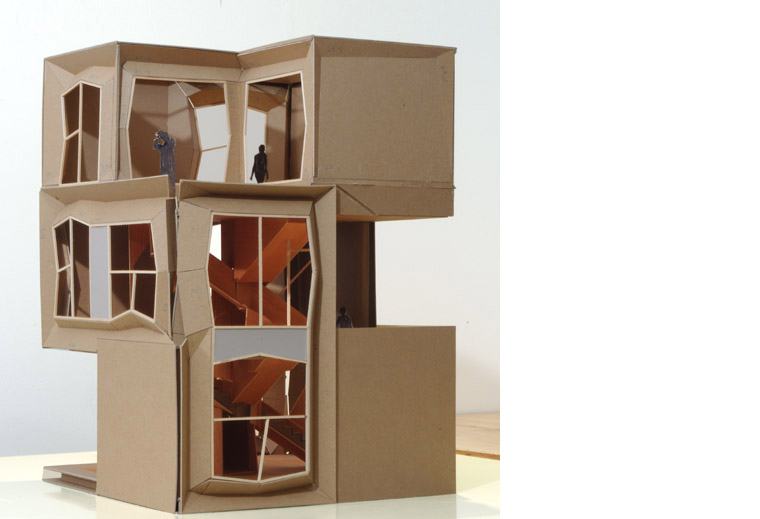
PlatyComb is a portmanteau that combines platycosm and honeycomb. The former refers to the ways in which spaces glue to themselves, and the latter to collectivities in construction and living. It consists of a core module, a shell module and an addition. The core can permute within the shell, the shell can connect to itself in a specific number of ways and orientations, and the addition can be added onto the shell also in a specified number of ways and orientations. The modules can be deconstructed and put back up in different combinations.
Qualia 1- I Go Anywhere
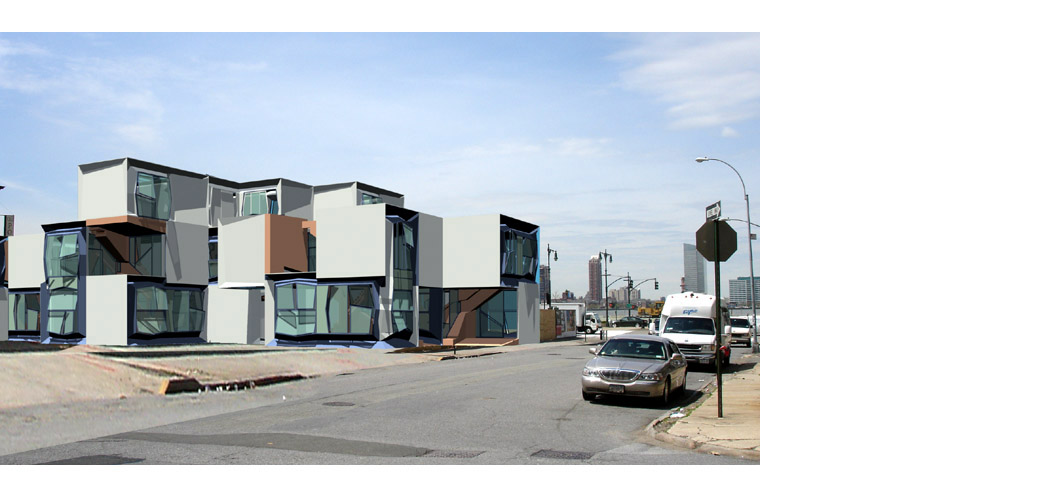
PlatyComb is based on the symmetry group of the cube. Working with the 24 proper (i.e. excluding reflections) rotations in space that preserve congruency, an initial cubic form can be 'marked' to show how the cube has changed. This 'marking' can also be used to physically reduce the number of congruent rotations. We 'mark' our initial cube by taking out a pair of opposite corners. The resulting six automorphic permutations form the working group for PlatyComb- all ways and means of topological operations that are used to generate forms and connectivities are derived from this group. The forms deliberately leave lacunae in their overall result, which is a way of instigating a genuine unplanned, local take over of parts of the structure. From there the project begins by assuming that it can go anywhere.
Qualia 2- I Connect
As a self-positing capacity for 'dwelling', Architecture recapitulates an attempted synthesis of its alienating effects and the situational excess of sites. Paralleling capitalism's deeper penetration into the means of which matter, energy and people are organized on the planet, Architecture today 'dwells' in a more fungible way than its immediate predecessors, and the polemical powers which formed an active concern for Modernism function now like a suppressed gene. Though common to all forms of contemporary architectural practice, the schema for which this 'fungibility' is actualized in modular construction is interesting in that the order of design is reversed- the problem of the site is post-posed for a modular construction that comes ready made as a solution for 'dwelling'. Often this comes with an organizational or production-based imperative, which nevertheless presumes that architecture conserves its ability to conjugate with a class of sites in general. Architecture today claims to not only dwell comfortably when designed for a site, it even says so if the site comes after conception. It claims to work anywhere, and modular construction is the most naked expression of this claim.
Qualia 3- I Love Others
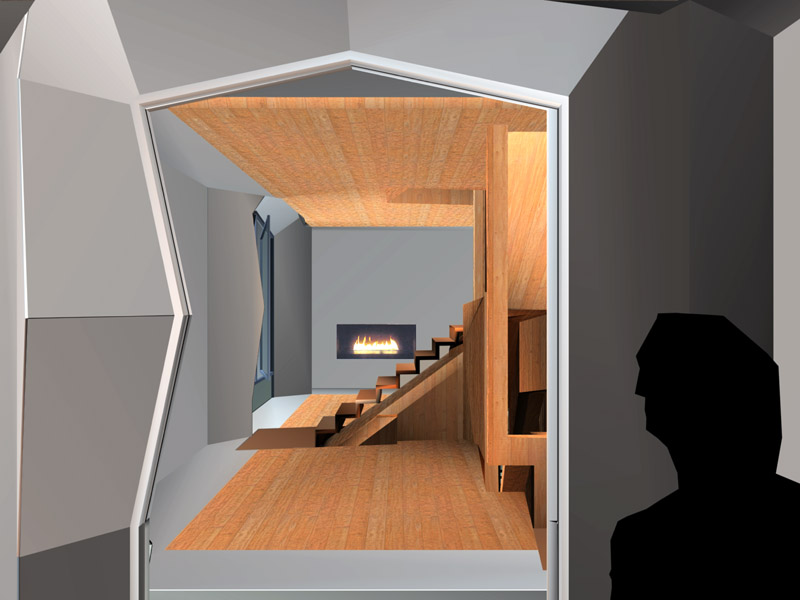
In light of all this we can say that PlatyComb consists of three qualia. The first is its fungibility, the ability to go anywhere. The second is that of connection, it is an experiential and constructional derivation of connection, both with itself and with its site. And third refers to PlatyComb's agapism, it loves others, which refers to the desire of being mediated by architecture, or the mediation of desire by architecture, you choose.